


can science save these threatened species from extinction?
[ad_1]
Perched among the fronds of the world’s loneliest tree, Viswambharan Sarasan had an important decision to make. Sarasan had worked for years to get access to this palm — the last living member of the species Hyophorbe amaricaulis, which grows in Curepipe Botanic Gardens, Mauritius.
He reached up towards a cluster of its walnut-sized, olive-green fruit. Sarasan, a botanist at the Royal Botanic Gardens at Kew, near London, had been through sensitive negotiations for permission to take the fruit, each with one crucial seed inside. He then had to wait for the tree, nicknamed the lonesome palm, to produce them. Nine metres up, 50 fruit dangling within his grasp, he had to decide how many to take: enough to give himself a chance of culturing them back at Kew, while leaving enough for local scientists to work with.
“It was the only shot I could get,” he says of his visit in June 2006. “But I didn’t want to take all the seeds and then it turns out badly.”
He picked ten fruit. It was not his lucky number.
When the plight of trees gets publicity, deforestation is generally the reason, but it is not the only crisis they face. Nearly one-third of trees — more than 17,500 species — are threatened with extinction. This is more than twice the number of threatened mammals, birds, amphibians and reptiles combined1. Mass plantings of trees, paradoxically, often add to the problem by using single species. Now, hundreds of plant conservationists globally are fighting to save the trees speeding towards extinction.
“We shouldn’t be giving up on any tree species,” says Paul Smith, head of Botanic Gardens Conservation International (BGCI), a London-based charity that co-leads the campaign to secure the future of the world’s threatened tree species.
But time is short, the obstacles are formidable and both climate change and fashions in ecology are moving against them.
Peter Bridgewater, a specialist in biodiversity governance at the University of Canberra, Australia, says that finding a natural home for every tree species is impossible because climate change is altering ecosystems so fundamentally. Scientists who think this goal is realistic are “living in their own cloud cuckoo land”, he says.
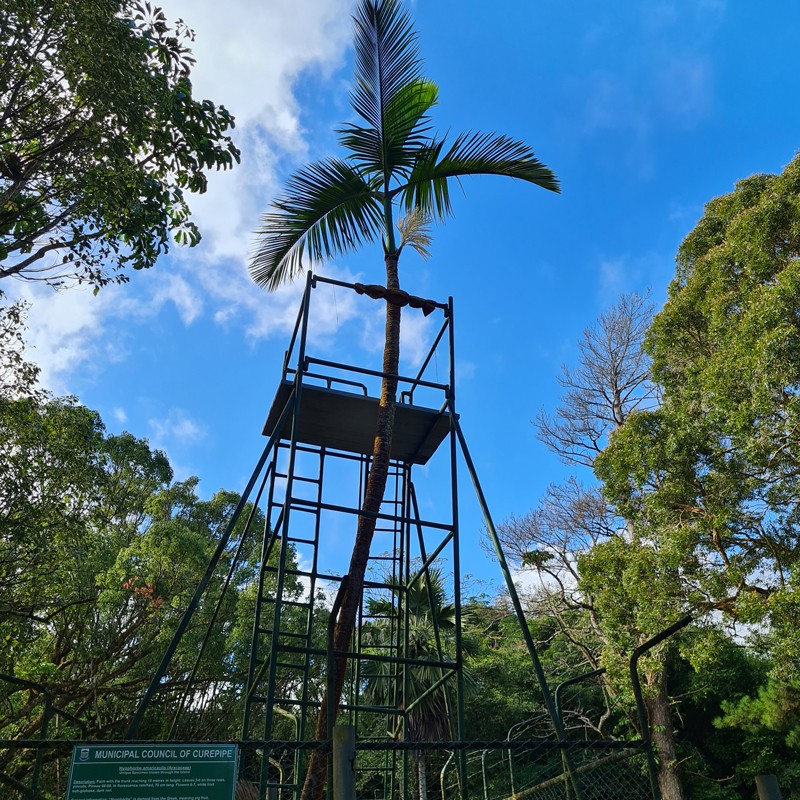
The ‘lonesome palm’, which lives in the Curepipe Botanic Gardens in Mauritius, is the last surviving member of the species Hyophorbe amaricaulis. Researchers have tried for years to help it reproduce, without success.Credit: Vincent Florens
Neglected trees
Inextricably linked with the problem of climate change, and equally as damaging, is the disappearance of species from Earth. The rate of extinction is at historic levels and accelerating, with around one million animals and plants under threat.
The plight of trees can get lost among the tales of endangered mammals or birds. To get trees more visibility, in 2016 the BGCI, working with the International Union for Conservation of Nature (IUCN), organized the largest conservation assessment in the IUCN’s history: the Global Tree Assessment. Hundreds of plant conservationists searched rainforests, mountains and strife-torn regions, sometimes with no more than a crinkly herbarium specimen or the testimony of a long-dead explorer to guide them.
In a 2021 report, they announced that they had found 58,497 tree species, of which 17,510 were threatened2. Since then, almost 2,800 of those have been labelled as critically endangered. Some 142 species are thought to be extinct in the wild (see ‘Trees under threat’). This year, a separate group of modellers estimated that a further 9,000 tree species are undiscovered3.
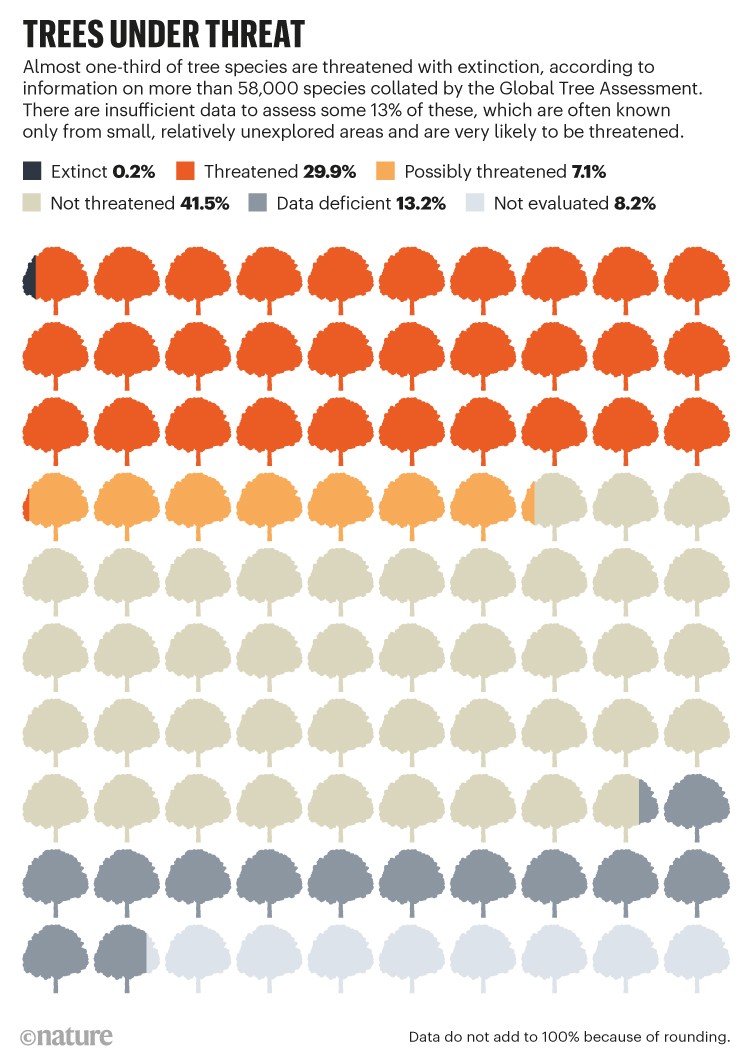
Source: Ref. 2
It is not just the number of trees, but also their diversity that matters. A single species can be the foundation of an entire ecological network, and its disappearance could cause a cascade of extinctions that might lead to an ecosystem collapse.
Strong, diverse ecosystems are also better at sequestering carbon, says Jean-Christophe Vié, director-general of the Franklinia Foundation, a private organization in Geneva, Switzerland, that funds tree conservation and supports the Global Tree Assessment. No tree species should be viewed as dispensable, says Vié, because it would set a precedent for every developer, farmer or logger to justify removing any threatened tree.
But tree conservation has become lost in international biodiversity targets — partly because trees get subsumed into general plant-conservation goals, and because plants are generally less showy than birds and animals. Trees need to be assessed for ecologists to champion them, says Malin Rivers, head of conservation prioritization at the BGCI.
“If you look at mammals, birds, reptiles, they have data to bring to the table when there is a policy discussion,” she says. “Taxonomy gives the species a name; conservation assessment gives it a voice.”
Protect and propagate
Armed with the Global Tree Assessment’s catalogue of threatened species, conservationists have begun prioritizing species and taxonomic groups. The best approach, says Smith, is to protect vulnerable trees in their natural habitats. If that’s not possible, researchers try growing them from seed in a laboratory, greenhouse or botanic garden.
The Global Tree Assessment revealed that nearly two-thirds of threatened trees are found in areas that are already protected, and stressed that one important task is to strengthen or expand these havens.
That might mean controlling grazing, implementing a national logging ban for a particular species or establishing plots on which the tree can be cultivated for fruit or flowers without harming the larger population. On the eastern Caribbean island of Dominica, for instance, where harvesting resin for incense was killing lansan trees (Protium attenuatum), a tweak to the tapping method has halted the damage.
Sometimes, however, so few trees are left that protecting an area isn’t enough.
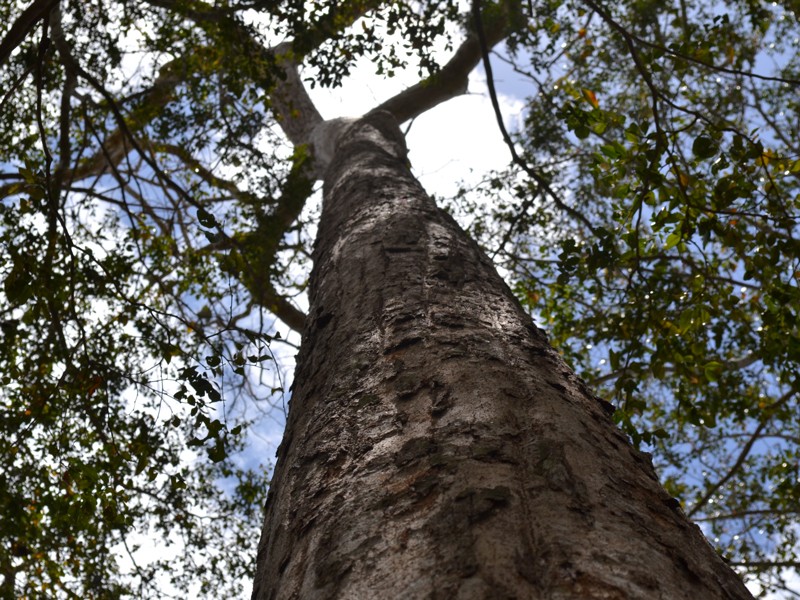
In its forest habitat in Tanzania, Karomia gigas is threatened by a seed-killing fungus.Credit: Kirsty Shaw/BGCI
In Tanzania, seed-biology specialist Fandey Mashimba works with a tiny population of a towering species called Karomia gigas. These trees, with their large oval leaves and distinctive, papery fruit, were thought to have gone extinct in the 1980s, but around six of them were discovered in 2011 by botanists from the University of Dar es Salaam. Protecting the habitat isn’t enough, because a fungus destroys their immature fruit. Mashimba, who oversees seed production for Tanzania’s Forest Service Agency, tries to whisk the fruit away before the fungus infects them, to sterilize and multiply the seeds for planting.
Mashimba and his colleagues tried germinating hundreds of K. gigas seeds. The result: just three treasured plants, which Mashimba monitors through his office window as their giant leaves wave in the breeze. In 2018, the forestry service also dispatched 6,000 fruit to the Missouri Botanical Garden in St Louis. There, botanist Roy Gereau oversaw the extraction and cultivation of 24,000 seeds. The seeds produced only 30 plants. Last year, one sapling unfurled a small, pale purple flower, which perished within a day. When two trees flower simultaneously, botanists will attempt cross-pollination.
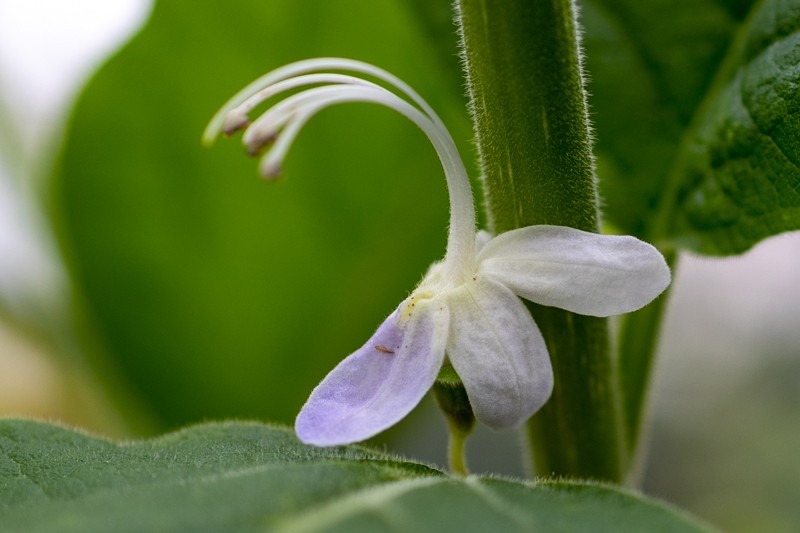
One of the 30 K. gigas plants at Missouri Botanical Garden flowered for a single day last year.Credit: Cassidy Moody/Missouri Botanical Garden
Mashimba is lucky in one respect: at least K. gigas produces seeds. Some trees produce none because their pollinators are gone; sometimes only one sex of a tree remains. For instance, most of the surviving specimens of the catkin yew (Amentotaxus argotaenia) in southern China are male. After a global search, a single female was discovered in the Royal Botanic Garden Edinburgh, UK; scientists there dispatched cuttings for planting near the surviving males. When they flower, reproduction can begin, says Gunter Fischer, a restoration ecologist at Missouri Botanical Garden. But this could take 30 years.
Even if scientists do manage to acquire seeds from trees that are near extinction, germinating them can be tricky. Some go into dormancy, a protective state that, depending on the species, might be broken only through heating, cooling or scarring. Natural dormancy can last for years. Scientists try to circumvent it by culturing the embryo — the small section of a plant seed that will become the roots and stems — in a process known as embryo rescue.
Every trick in the book
The lonesome palm in the Curepipe Botanic Gardens — elderly, damaged and spindly — has seed problems, germination problems and more. It has resisted multiple rescuers since the 1980s. One obstacle is that the palm produces male and female flowers at different times, to avoid self-fertilization. Using a ladder and a brush, scientists override this process to collect, store and transfer pollen.
It was the fruit of one such assisted-pollination project, each containing a single seed, that Sarasan carried back to Kew in 2006. He knew that lonesome palm seeds don’t grow if they are planted, so he used embryo rescue. With so few seeds, he felt there was no scope for experimenting with different culture media, so he made his best guess as to which blend to use.
“I was so protective,” he says. “It was the responsibility, the excitement and also the fear of losing it.”
The plantlets grew to 25 centimetres long. Then, one day, their fine white roots turned brown and they died, doubtless because of some nuance of the culture medium, he says.
Other efforts have been derailed by mishap. In 2010, Kew horticultural scientist Carlos Magdalena negotiated to collect some freshly picked palm fruit while he was visiting Mauritius. Owing to a misunderstanding, two of the five fruit stored in a nearby fridge were eaten by a garden labourer who did not know their significance. Back at Kew, the seeds from the others failed to germinate.
The failure rankles with Magdalena, who has a string of plant rescues to his name. As he roves the Kew greenhouses, steamy sanctuaries for plants that are bereft of a place in the wild, he sometimes feels he is all that stands between a species and its permanent loss.
José Luis Marcelo Peña knows how he feels. In 2018, Marcelo Peña, a taxonomist at the National University of Jaén in Peru, was trekking through a steep, parched forest in Peru’s Marañón valley when he discovered a tree with light green flowers: Pradosia argentea, thought to be extinct.
“It was a unique happiness that cannot be described,” says Marcelo Peña. Surveys yielded 200 more trees in the area, all of which were imminently threatened by agriculture.
COVID-19 lockdowns began just as he attempted to save them. Without university facilities, but with remote help from the BGCI, he extracted 400 seeds from the purple fruit at home. More than 60 germinated: 20 survived. The following year, he tried again using fresh seeds, but a fungus got them all.
As he finishes his story, he removes his glasses to wipe tears away. “It’s a big responsibility,” he says. And even with 20 little successes in the nursery, Marcelo Peña is concerned about the next step — reintroduction to the wild. Local people were unaware of P. argentea until recently, he says. They now support protecting the remaining trees — but they also need space to farm, which could put those survivors at risk.
Back to the wild
Thriving in the wild is a distant dream for K. gigas, too. Tanzania’s forest agency and its partners are developing seed-propagation sites and nurseries for the species. But its future is uncertain, mostly because new trees could succumb to the same mysterious fungus.
“We might have to content ourselves with saying, well, we have these lovely creatures in the zoo,” says Gereau.
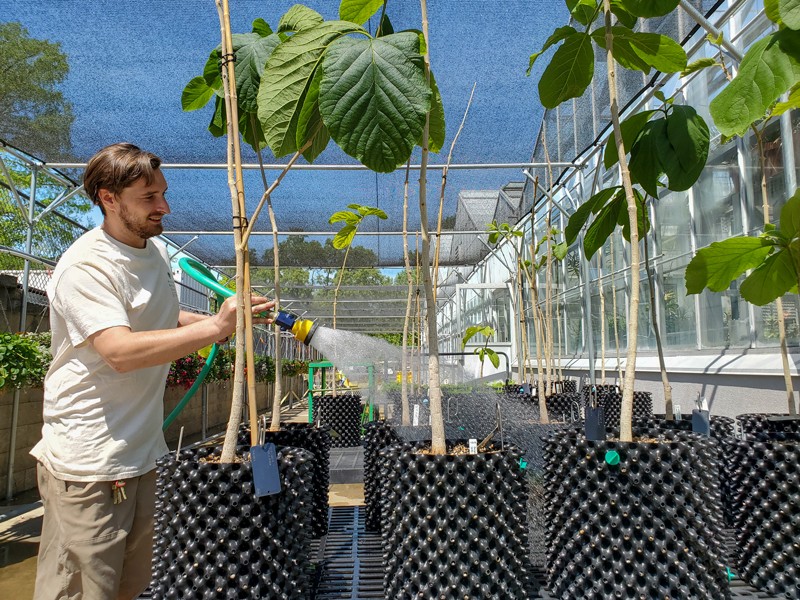
A project at Missouri Botanical Garden produced 30 K. gigas plants.Credit: Cassidy Moody/Missouri Botanical Garden
Reintroductions can be spectacularly successful, however. The BGCI highlights a project on Malawi’s Mount Mulanje, the only natural home of the cypress Widdringtonia whytei. In 2019, just seven mature trees remained, the others victims of illegal felling. By 2022, thanks to a collaboration with Malawi’s Forestry Research Institute and local people, the slopes are alive again with 500,000 seedlings, and many locals now make a living through this endeavour.
Propagation itself turned out to be fairly simple, says Smith. In Mauritius, by contrast, ecologists have a tougher task. The Mauritian Wildlife Foundation, with help from botanists elsewhere, is attempting to save multiple critically endangered species at once, but success at propagation varies widely. There have been some dramatic restorations, including of some species from which only a single tree remained. But the lonesome palm, now part of this project, continues to resist.
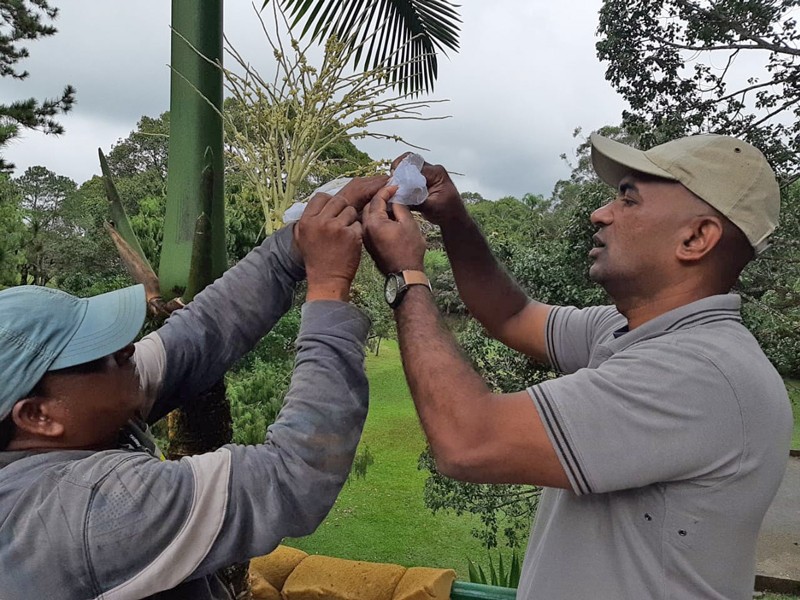
Scientists affix protective netting around hand-pollinated flowers on H. amaricaulis in Mauritius.Credit: Atmah Toocaram
A fourth attempt has begun. Nets hang around the tree to catch the male flowers and store their pollen for hand fertilization when the female flowers appear. In France, botanist Stéphane Buord at the National Botanical Conservatory of Brest hopes to overcome the problem that faced Sarasan — too few seeds — by tapping into the large quantities of seeds produced by Hyophorbe vaughanii, a close Mauritian relative of the lonesome palm. He and his team have spent years working out a complex technical protocol that coaxes its embryos into rooted seedlings that survive outside a test tube. Now he is waiting to try this approach on the seeds of the lonesome palm.
If he succeeds, the palm might eventually be reintroduced into a national park or into the wild. Kersley Pynee, a conservation scientist at the Mauritius National Parks and Conservation Service, has reintroduced other trees and shrubs and says it is an uphill struggle. Plants can fall victim to fungi, pests and other assailants. After one recent planting of 1,000 seedlings of the flowering shrub Nesocodon mauritianus, just 5 now remain, he says.
This is to be expected, says Smith. In nature, trees produce vast quantities of seeds, of which only a fraction germinate and survive because of natural dangers such as infestations, fire or competition for light or nutrients.
Tree museum
The Global Trees Campaign has so far planted out hundreds of thousands of seedlings from 300 threatened tree species. But for trees that can no longer survive in the wild, the only other options are to keep a specimen in a living collection, or to store its seeds in a bank.
One target of the 2011 Global Strategy for Plant Conservation, part of the Convention on Biological Diversity, was to conserve at least 75% of threatened plants in living collections or seed banks by 2020 — a goal that has not been met. What’s more, simply drying and freezing seeds doesn’t always work. Technologies such as cryopreservation — fast freezing at ultra-low temperatures — could offer an alternative, although it is expensive and impractical for many countries. And in 2018, conservationists warned4 that the seeds of one-third of tree species cannot be banked, largely because they don’t survive drying.
Smith rejects this bleak diagnosis. Between seed banks, cryopreservation, nurseries, botanic gardens and arboreta, there are plenty of options to “buy us time”, he says.
One trend that could help is mass tree-planting, in which governments and corporations plant trees to sequester carbon to meet emissions targets. Done badly, as many of these projects are, mass plantings can destroy biodiversity. Done well, they could rescue many species, says Smith. “This is a bandwagon we really need to jump on.”
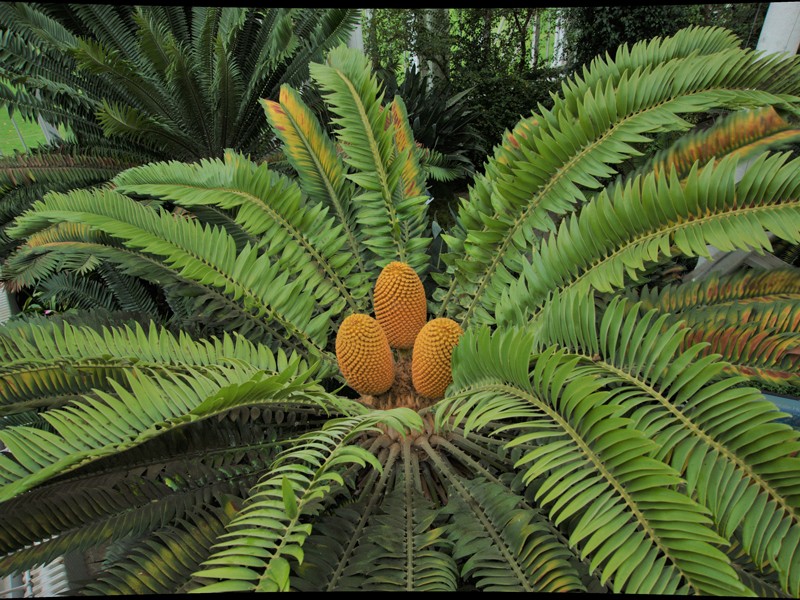
This specimen of Encephalartos woodii, found in South Africa, was relocated in the late 1800s to the Royal Botanic Gardens at Kew, near London. It is the only one of this species to ever have been found in the wild.Credit: Andrew McRobb/RBG Kew
To help boost the usefulness of such projects to biodiversity, the BGCI and its partners have drawn up a certification programme for tree-planting projects called the Global Biodiversity Standard.
Species conservation could also piggyback on the growing ecosystem-restoration movement. There are now more than 100,000 of these projects globally, helping ecosystems to capture carbon and provide essential services.
Smith argues that including native species strengthens such projects. But restoration ecologists are often more concerned with overall function than with individual species, says Curt Meine, a historian of ecology at the Aldo Leopold Foundation in Baraboo, Wisconsin. And they want ecosystems to provide multiple services to humans, including sustainable livelihoods. Some acknowledge that tree conservation should have a place. “I do think it’s important work and we could learn a lot,” says Robin Chazdon, a restoration ecologist at the University of Connecticut in Storrs.
But there are more threatened tree species than there are restoration projects to absorb them. “It’s not going to be the way of protecting all of those tree species,” she says.
Some ecologists have deeper concerns. Bridgewater says that the efforts of conservationists and of restoration ecologists don’t factor in climate change.
“They all in the end assume that nothing is going to be changing,” he says. But many trees, and whole ecosystems, just won’t survive in their current ranges, he says.
“You could save every tree species but it will not be what people think — it will be in botanical gardens and larger managed conservation areas, and planting where it’s suitable for survival, not where it’s currently growing.”
But the tree saviours are driven by something visceral: panic at the permanent loss of the rich, unique, irreplaceable and often-undeciphered identity of each species.
“I don’t feel I am, as a humble human, here for a few decades on this planet, authorized to just cut off millions of years of evolutionary history,” says Vié. “Every species has a value.”
[ad_2]
Source link


